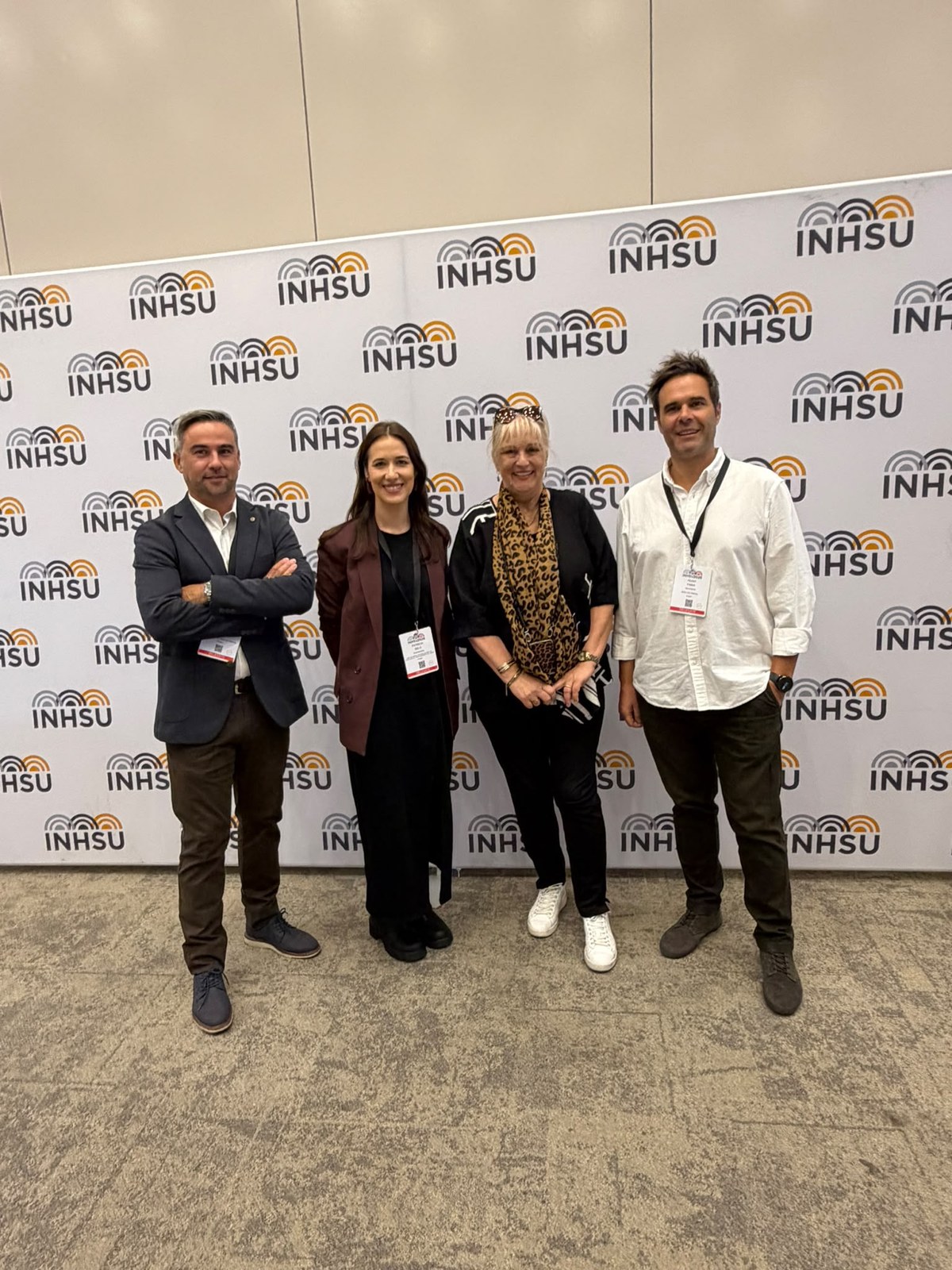

Project news · INHSU 2026
· Clarion Congress Hotel · Prague, Czech Republic
MOBHOPE at INHSU 2026: sharing mobile care and building connections
MOBHOPE, coordinated by the Fundación para la Investigación Biomédica del Hospital Gregorio Marañón, presented a scientific poster in Prague, sharing its approach to mobile liver care and strengthening connections with the international hepatitis and harm reduction community.
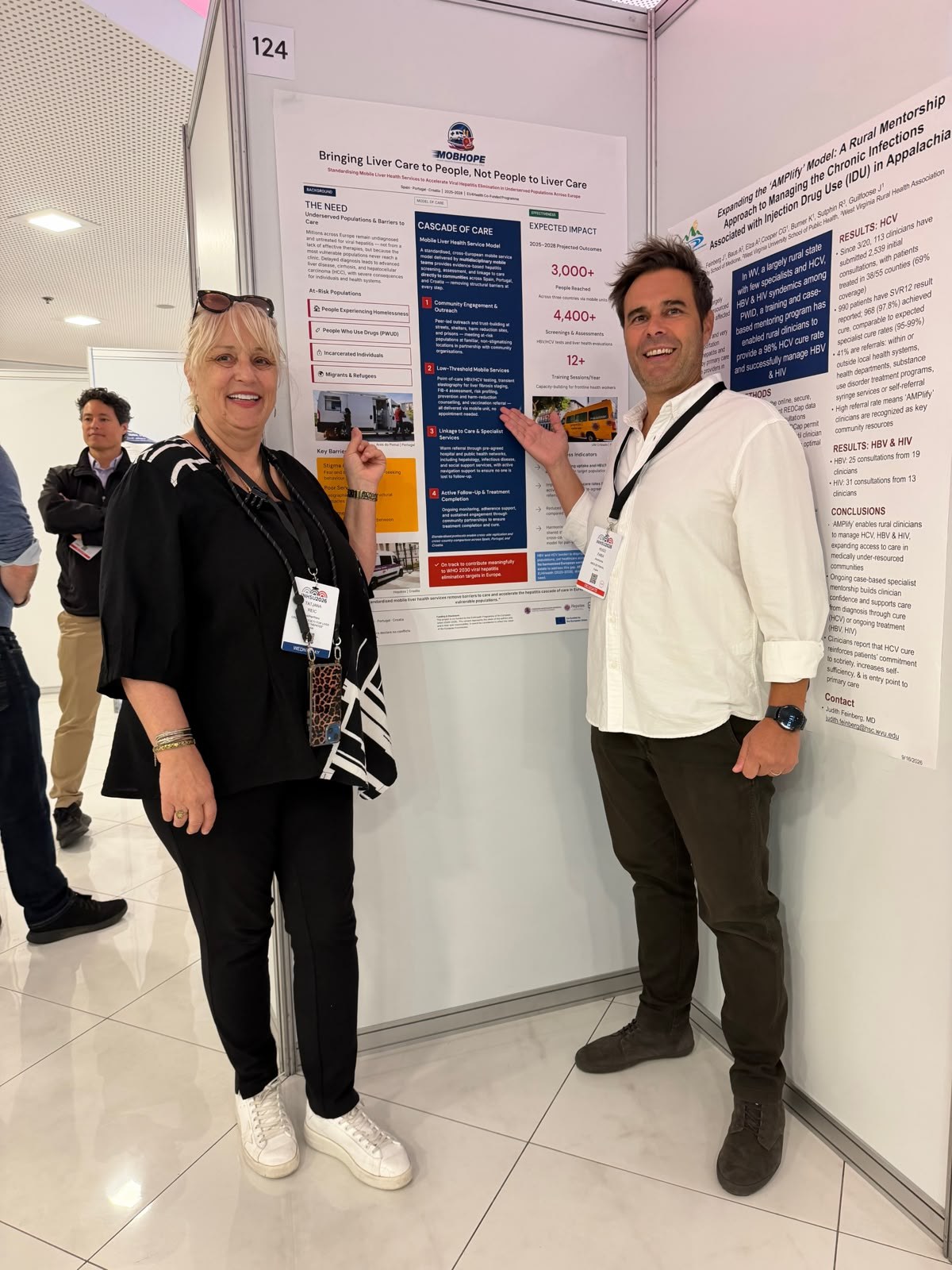
Bringing Liver Care to People, Not People to Liver Care
Standardising mobile liver health services to accelerate viral hepatitis elimination in underserved populations across Europe
MOBHOPE took part in INHSU 2026 in Prague, the 14th International Conference on Health and Hepatitis in Substance Users, held from 6 to 9 October at the Clarion Congress Hotel. The project presented its mobile care approach to an international community working on health, hepatitis and substance use.
The poster, “Bringing Liver Care to People, Not People to Liver Care”, focused on standardising mobile liver health services for populations facing barriers to care across Europe. It set out a pathway connecting community engagement, accessible testing and assessment, referral to specialist services and support through follow-up.
The presentation was well received and provided an opportunity to discuss practical ways of bringing care closer to people. For MOBHOPE, participation in INHSU was a valuable step in sharing the project, exchanging experience and building relationships with professionals, researchers and community organisations.
MOBHOPE is coordinated by the Fundación para la Investigación Biomédica del Hospital Gregorio Marañón (FIBHGM), in Spain. The model brings together experience from mobile outreach in Spain, Portugal and Croatia. Its emphasis on accessible services, community partnerships and continuity of care supports MOBHOPE’s aim of reducing barriers and contributing to viral hepatitis elimination.
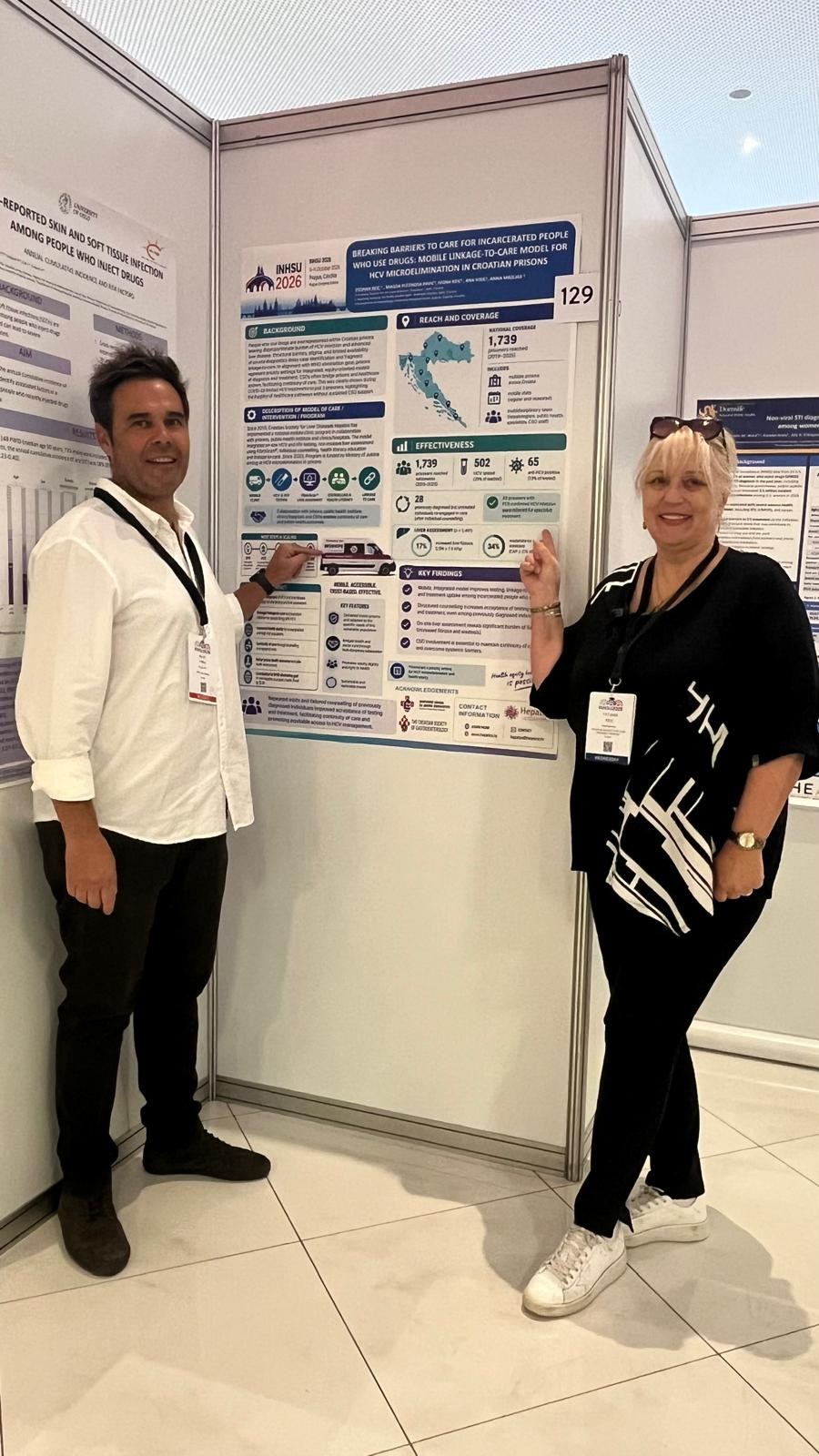
Hepatos also shared its experience of mobile linkage to care for people in Croatian prisons in a separate poster. Together, these contributions illustrated how community-based and mobile services can inform conversations about reaching people who are often underserved.
MOBHOPE will build on these exchanges to continue disseminating its work and exploring opportunities for collaboration. Sharing practical approaches across countries is a central part of developing a European network committed to more equitable access to care.